A wai has social context; a warm verbal greeting is often sufficient for newcomers.
Respect without performance
Thailand guide 10 / 13 · reviewed 21 August 2026
Thai culture & etiquette
Good etiquette is less about memorising exotic rules and more about observing, asking, dressing for context and avoiding public confrontation or casual disrespect toward religion and institutions.
Official sources checked ↓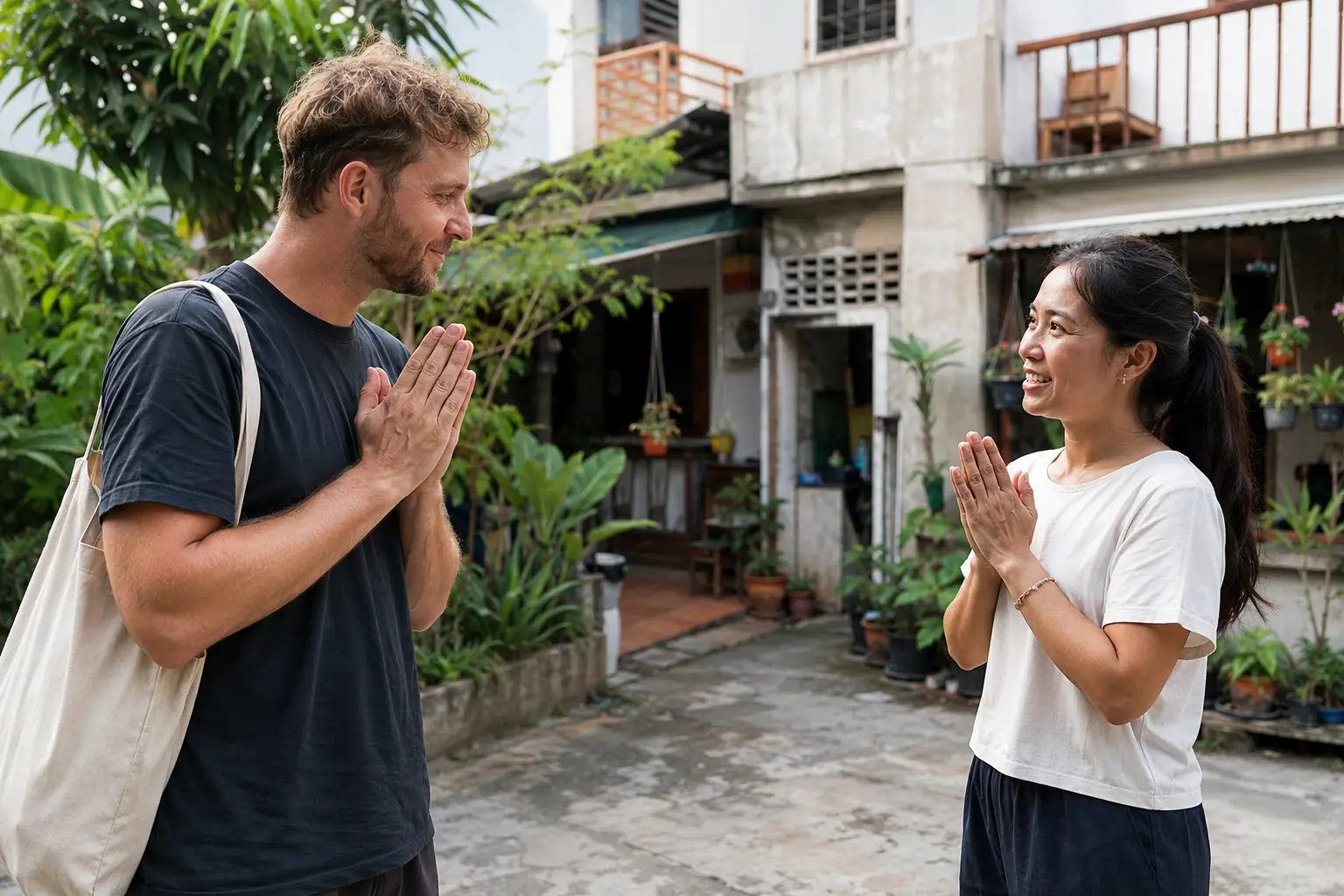
The decision in one paragraph
Thailand is diverse. Age, region, religion, workplace and relationship all change what feels appropriate, so treat any short etiquette list as a starting point rather than a script.
Follow posted rules and staff instructions.
Correcting or confronting someone publicly can damage trust.
01
Observe before imitating
The wai is meaningful and varies with relationship and status. New residents do not need to perform an elaborate version in every interaction; notice what Thai colleagues and neighbours do, respond naturally and ask a trusted person when unsure.
Use polite titles and names as people introduce themselves. In professional settings, hierarchy and indirect communication can matter, but workplaces differ widely. Summarise important decisions in writing without treating a softer spoken style as a lack of clarity.
Your checklist
- ✓Learn basic polite particles and greetings
- ✓Follow dress and footwear cues
- ✓Ask before photographing people
- ✓Move disagreement into a private setting
- ✓Treat regional and religious differences seriously
02
Respect homes and religious spaces
Remove shoes where the host or signs indicate. Dress modestly at temples, avoid climbing on sacred structures and follow photography restrictions. Do not point feet toward Buddha images or people when seated, and do not touch monks or sacred objects without clear invitation.
03
Communicate without causing avoidable loss of face
Keep your tone controlled, especially in public. If a service has failed, state the desired solution and evidence calmly. Public accusation, sarcasm or shouting can turn a fixable problem into a relationship or safety issue.
Do not confuse politeness with agreement. Confirm dates, prices, responsibilities and decisions in a short written message, and invite correction.
04
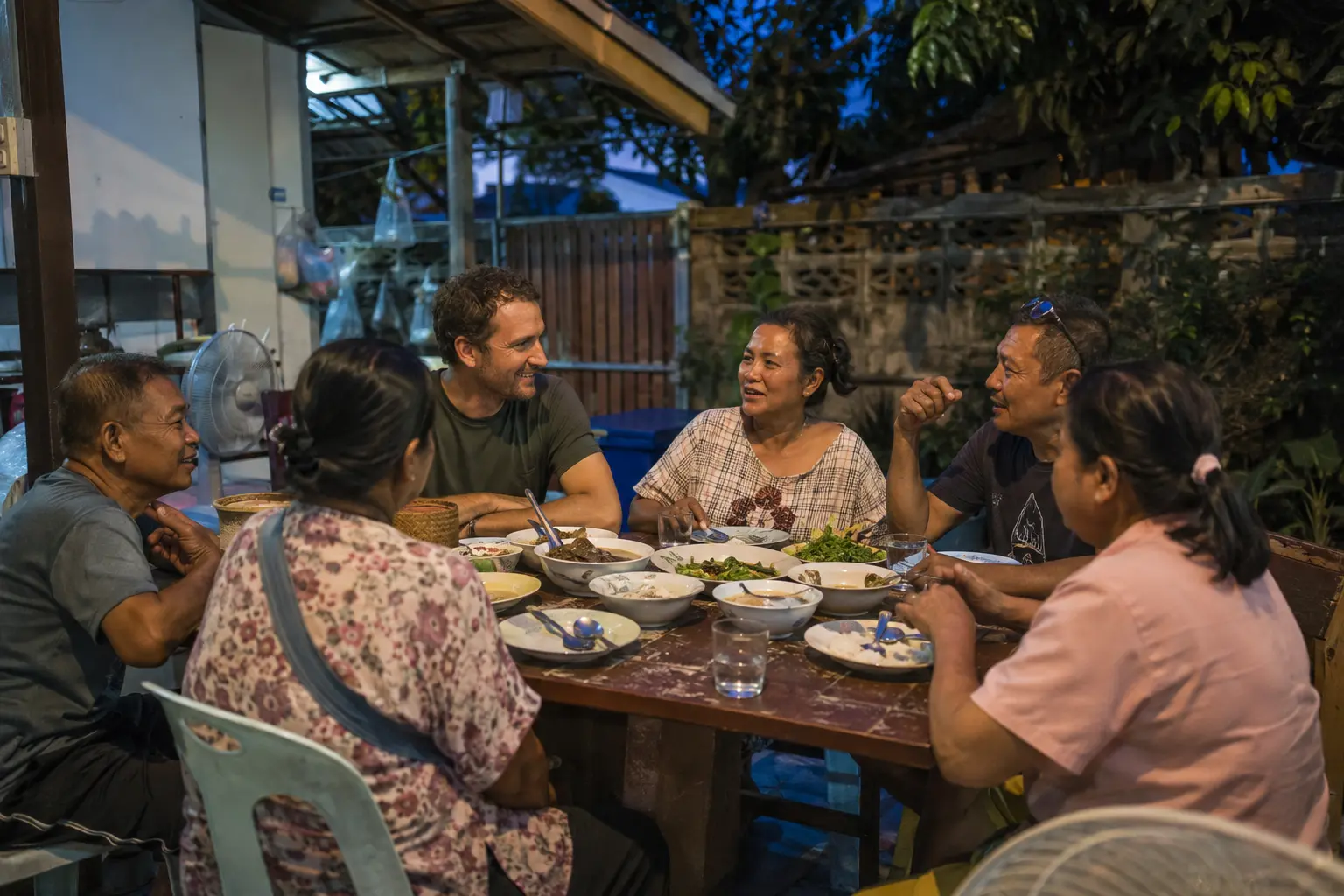
Take part in the local community
Learn how the neighbourhood handles waste, parking, noise and shared space. Support local businesses, join community activities with humility and ask permission before turning people or rituals into content. Long-term trust comes from consistency more than from knowing every custom on day one.

Common failure points
What to watch for
One national personality
Thailand contains major regional, class, religious and generational differences.
Sacred imagery as décor
Buddha images and religious spaces require more care than ordinary tourist props.
Public escalation
Anger, humiliation and aggressive gestures can worsen disputes and create legal or safety risk.
Evidence record
Official sources checked
These primary sources were checked on 21 August 2026. They support the regulatory or procedural statements in this guide. The issuing authority's current page, notice or policy wording takes precedence if it changes later.
01
Tourism Authority of Thailand
↗02Official destination, cultural and visitor information.
TAT Newsroom: visitor information
↗Official responsible-travel and visitor guidance.
Found a changed rule or broken source? Send the page address and replacement official source to hello@emigrated.org.
General information, not individual advice. Immigration, tax, legal, medical and insurance outcomes depend on your facts. Confirm the current official rule and use a properly qualified adviser where the consequences matter.