Dense cities, mountain regions and coastal towns support very different routines.
Practical Thailand guide
Reviewed 21 August 2026 · topic: Daily life in Thailand
Living in Thailand: the pros and cons for expats
A balanced look at the benefits and drawbacks of expat life in Thailand, including cost, healthcare, climate, visas, transport and daily administration.
Read the direct answer ↓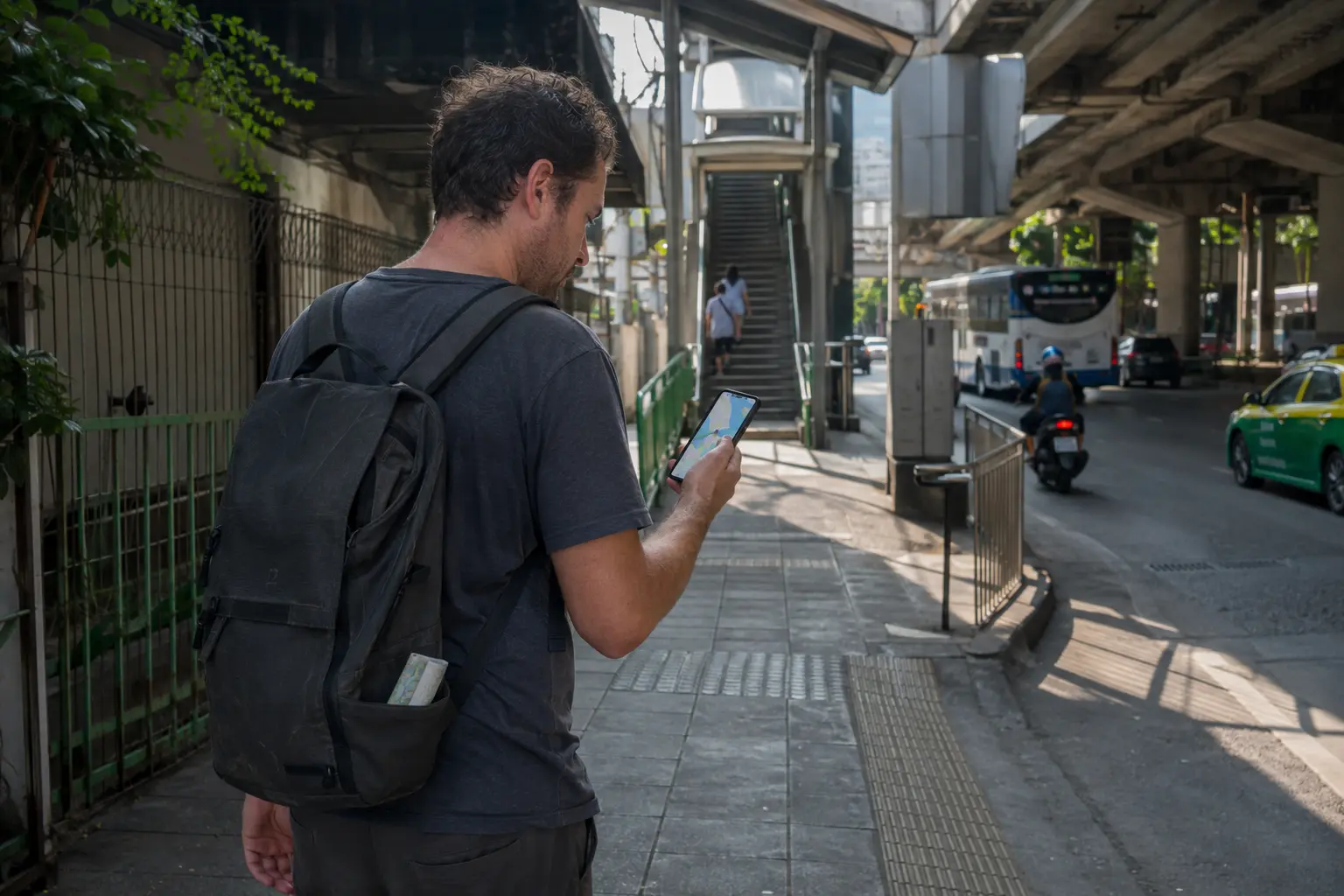
The short answer
Thailand can offer a varied lifestyle, strong private healthcare in major centres, good domestic travel and lower costs than many Western cities. The trade-offs include heat, road risk, seasonal air pollution in some regions, uneven walkability, language friction and immigration, tax and banking processes that require active management. The answer depends more on the exact city, visa and household than on Thailand as a whole.
Visa, reporting, tax, banking and work permission do not run on autopilot.
Trial the intended neighbourhood during workdays and a difficult season.
01
Where Thailand can work very well
Major cities offer deep food, service, transport and healthcare choices, while smaller cities and coastal areas can provide more space and a slower routine. Domestic travel makes it possible to choose between several versions of Thailand without leaving the country.
A carefully chosen home can offer good internet, convenient delivery and a strong neighbourhood routine. Private hospitals in major centres often serve international patients, but access, price and insurance networks vary by facility and specialty.
02
The practical drawbacks
Heat, humidity, monsoon rain and regional air pollution change how a home and commute feel. Road risk is material, particularly for motorcycles. Sidewalks and public transport vary sharply, so a cheap home can create expensive or unsafe vehicle dependence.
Administrative outcomes can depend on the exact visa, office, bank, branch and evidence. This is not a reason to avoid Thailand, but it rewards organised records, calm follow-up and an emergency reserve.
03
The social and cultural adjustment
Learning functional Thai improves independence and reduces small misunderstandings. Communication may be more indirect in some settings, and public confrontation can damage a relationship or make a dispute harder to solve. Written confirmation of dates, prices and responsibilities remains sensible.
A healthy expat life needs more than an English-speaking bubble. Build relationships through work, neighbourhood routines, hobbies and respectful participation, while recognising that Thai society differs by region, generation, class and religion.
04
How to decide with less guesswork
Spend at least several weeks in the exact area you may choose and keep normal hours. Make the work or school journey, shop for ordinary groceries, test healthcare and internet, price a realistic rental and experience the area after dark.
Run the budget with insurance, visa costs, flights home, tax advice and uncovered medical care included. Then ask what would happen if exchange rates moved, employment ended, a health condition appeared or you needed to return home quickly.
Your checklist
- ✓Test the address in a normal working week
- ✓Visit during the least appealing season
- ✓Price the full household, not just rent
- ✓Confirm the legal route before relying on income
- ✓Keep an exit and emergency fund
See the whole topic
Daily life in Thailand
Connect this answer with the immigration, tax, housing, health and daily-life decisions that surround it.
Open the full topic guide ↗Frequently asked
Questions people ask next.
These answers are general. Use the dated official sources below and check the authority handling your exact case.
Is Thailand a good country for expats?
It can be, particularly when the chosen city, legal status, healthcare access and budget fit the household. It is a poor fit when the plan depends on a tourist experience, illegal work, a fragile budget or assumptions that administration will always be flexible.
What is the biggest downside of living in Thailand?
There is no single answer. Common pressure points are heat, road safety, seasonal air quality, distance from family, language and the need to manage immigration, tax and banking carefully.
Can you live in Thailand without speaking Thai?
Many people manage in international areas, but basic Thai materially improves daily independence, safety and relationships. English availability drops outside major expat and tourist centres.
Is living in Thailand the same as holidaying there?
No. A resident deals with commuting, utilities, renewals, healthcare, tax, repairs and ordinary relationships. A neighbourhood trial with normal working days is more informative than another resort stay.
Evidence record
Sources checked
These sources were checked on 21 August 2026. Primary authorities take precedence if a rule or process changes later. Any non-official benchmark is labelled for what it is.
01
Air4Thai
↗02Official regional air-quality monitoring.
National Institute for Emergency Medicine
↗03Emergency medical system and the 1669 number.
Thailand Immigration Bureau
↗04Current in-country immigration services and notices.
Tourism Authority of Thailand
↗Official regional and destination context.
Found a changed rule or broken source? Send the page address and replacement source to hello@emigrated.org.
General information, not individual advice. Immigration, tax, legal, medical and insurance outcomes depend on your facts. Confirm the current official rule and use a properly qualified adviser where the consequences matter.