Confirm who owns the property or is authorised to receive money.
Practical Thailand guide
Reviewed 21 August 2026 · topic: Housing and utilities in Thailand
Renting in Thailand: an expat guide to leases, deposits and utilities
How expats can inspect a Thai rental, check the landlord or agent, negotiate the lease, record condition and understand utilities and address evidence.
Read the direct answer ↓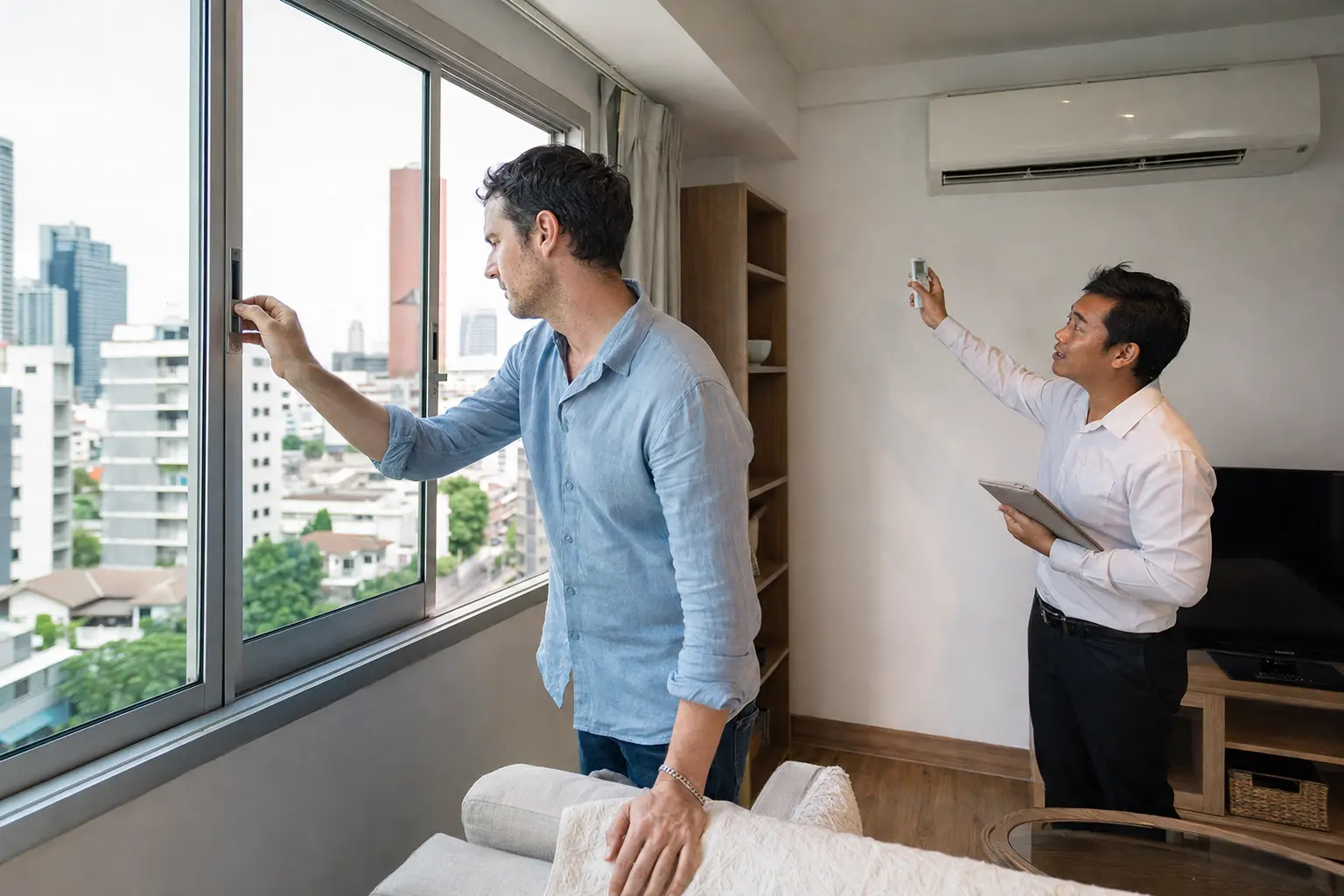
The short answer
Renting safely in Thailand means verifying the property and recipient, inspecting the building in ordinary conditions, reading the governing lease and recording the inventory, meters and payments. Confirm rent, deposit, notice, repairs, utilities, early termination and address documents in writing. Do not transfer a large deposit based only on a listing or messaging account.
Record condition, keys, contents and meter readings.
Notice, deposit return and early termination should be clear.
01
Choose the address through real journeys
Visit at the time you would commute, during rain where possible and after dark. Check walking safety, drainage, mobile signal, delivery access, parking, aircraft or nightlife noise and the route to work, school and healthcare.
Ask residents or building staff about flooding, lift reliability, water pressure, outages and planned construction. A unit can look excellent while the building or street makes daily life difficult.
02
Verify the deal and payment recipient
Ask for evidence that the person signing is the owner or properly authorised agent. Match names on the agreement, payment instruction and evidence. Be cautious when told to pay a different individual, overseas account or urgent reservation before inspection.
Use traceable payments and obtain a receipt. If a holding deposit is requested, record what it reserves, when it is refundable and what happens if the final lease differs from the proposed terms.
Your checklist
- ✓Owner or agent authority
- ✓Exact unit and included contents
- ✓Payment recipient and receipt
- ✓Refund terms for any reservation
- ✓Building rules and access
03
Read the lease as an exit plan
Confirm the term, renewal, notice, deposit, payment date, repair responsibility, pets, guests, subletting, early termination and which language version governs. Ask how damage, fair wear and deposit deductions will be assessed.
Clarify who pays electricity, water, internet, building fees and maintenance. Ask whether utilities are charged at the official meter or a contractual rate. Record any agreed repair or furniture removal before signing.
04
Document move-in and address evidence
Create a signed inventory with dated photographs, video, keys, access cards and meter readings. Test air-conditioning, appliances, taps, drains, locks, smoke alarms and internet availability before the condition report closes.
Ask what evidence the owner will provide for immigration, banking, driving-licence or other address processes and whether required accommodation notification will be completed. Keep the lease, receipts and correspondence together.
See the whole topic
Housing and utilities in Thailand
Connect this answer with the immigration, tax, housing, health and daily-life decisions that surround it.
Open the full topic guide ↗Frequently asked
Questions people ask next.
These answers are general. Use the dated official sources below and check the authority handling your exact case.
How much is a rental deposit in Thailand?
Market practice and legal treatment can depend on the landlord and type of rental business. Do not rely on one universal figure. Record the exact deposit, permitted deductions, inspection and return timetable in the lease.
Can a foreigner rent a condo in Thailand?
Yes, foreigners commonly rent condominiums and houses. The important checks are the landlord's authority, building rules, clear contract, address evidence and a traceable condition and payment record.
Should I pay a deposit before viewing?
It is safer to verify the property and recipient first. If a reservation is genuinely necessary, keep the amount proportionate and obtain written refund conditions and proof of authority.
Who pays for repairs and utilities?
The lease should allocate repairs, maintenance and each utility. Ask how usage is measured and charged, and record any unresolved defect before move-in.
Evidence record
Sources checked
These sources were checked on 21 August 2026. Primary authorities take precedence if a rule or process changes later. Any non-official benchmark is labelled for what it is.
01
Office of the Consumer Protection Board
↗02Consumer information and complaint routes.
Thailand Immigration Bureau
↗03Official address-notification and immigration-service context.
Department of Lands
↗04Official property title and registration authority.
Metropolitan Electricity Authority
↗Official electricity-service and tariff information for the metropolitan area.
Found a changed rule or broken source? Send the page address and replacement source to hello@emigrated.org.
General information, not individual advice. Immigration, tax, legal, medical and insurance outcomes depend on your facts. Confirm the current official rule and use a properly qualified adviser where the consequences matter.