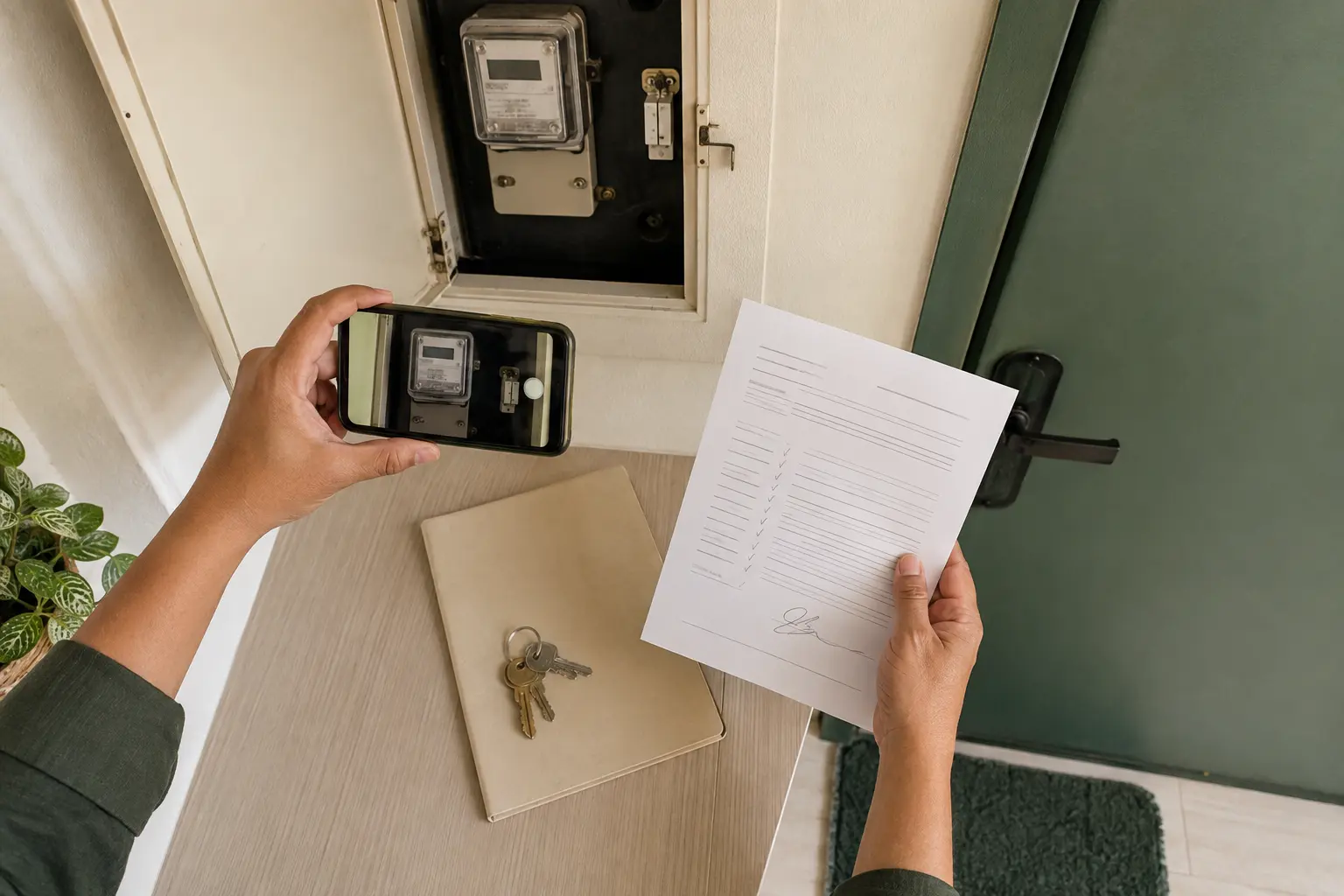
Record condition, meter readings, keys and included items.
Rent carefully before you buy
Thailand guide 03 / 13 · reviewed 21 August 2026
Housing & utilities in Thailand
Choose a home by testing the contract, building and daily journey, not by trusting the listing. Thailand's property rules and practical risks can be unfamiliar even when the apartment looks straightforward.
Official sources checked ↓
The decision in one paragraph
Verify the owner or authorised agent, read the governing-language contract, document the condition and understand how the address will be used for immigration and other services.
Ask what proof the owner will provide for official processes.
Foreign land and condominium rules need title-level due diligence.
01
Choose a neighbourhood through ordinary days
Visit in the morning, during a heavy downpour if possible, at evening rush hour and late at night. Check walking safety, drainage, aircraft or nightlife noise, mobile signal, food access and the true door-to-door commute. In Bangkok, being near a rail station does not guarantee a comfortable walk.
For families and people with ongoing medical needs, plot school, work and preferred hospital on the same map. In Chiang Mai, seasonal air quality can affect the suitability of open-air housing; in islands and coastal areas, maintenance, water supply and storm exposure matter.
Your checklist
- ✓Test peak-hour commute
- ✓Check flood and drainage history
- ✓Open every tap and run air-conditioning
- ✓Photograph meter readings
- ✓Confirm internet options with the building
02
Read the lease as an exit plan
Confirm rent, deposit, term, notice, renewal, repair responsibility, utility charging, pets, guests, subletting and early termination. Ask which language version governs. Record the property condition in a signed inventory with time-stamped photos and retain traceable payment evidence.
Clarify whether the owner will provide address documents and complete any required immigration notification. Do not assume a serviced apartment, condominium and private house follow identical utility or access arrangements.
03
Understand the ownership boundary
Foreign ownership of land is restricted. Condominium ownership, leasehold and BOI-related permissions operate under different rules and conditions. Never use a nominee structure or accept a sales claim as legal advice. An independent Thai lawyer should verify title, encumbrances, permits, common-area finances, foreign quota evidence and the exact registration route.
04
Set up the home for Thai conditions
Budget for air-conditioning use, water filtration preferences, pest control, humidity management and surge protection. Ask whether electricity and water are billed at official meter rates or a contractual rate. Review building fire exits, security, lift backup and delivery procedures before move-in.

Common failure points
What to watch for
Remote reservation pressure
Do not transfer a large deposit before verifying the property and the recipient's authority.
Agent equals adviser
The listing agent may facilitate the deal without independently protecting you.
Foreign ownership shortcuts
Informal nominees and opaque company structures can create serious legal risk.
Evidence record
Official sources checked
These primary sources were checked on 21 August 2026. They support the regulatory or procedural statements in this guide. The issuing authority's current page, notice or policy wording takes precedence if it changes later.
01
Department of Lands Thailand
↗02The official authority for land and condominium registration and title matters.
BOI: land ownership permissions
↗03BOI-specific land and condominium permissions and conditions.
BOI: 2026 business guide
↗04Official overview of foreign land restrictions and condominium conditions.
Office of the Consumer Protection Board
↗Consumer information and complaint routes.
Found a changed rule or broken source? Send the page address and replacement official source to hello@emigrated.org.
General information, not individual advice. Immigration, tax, legal, medical and insurance outcomes depend on your facts. Confirm the current official rule and use a properly qualified adviser where the consequences matter.