Confirm the correct Thai, ASEAN or international permit for your circumstances.
Stay mobile, licensed and insured
Thailand guide 07 / 13 · reviewed 21 August 2026
Driving & transport in Thailand
A rental counter handing over keys does not prove your licence or insurance position. Check resident licensing, vehicle documents and accident procedure before driving a car or motorcycle.
Official sources checked ↓
The decision in one paragraph
Transport choice is also a housing and safety choice. Compare rail, walking, ride-hailing, taxis and private vehicles against your daily route and risk tolerance.
Minimum legal cover is not the same as comprehensive protection.
Keep insurer, police, medical and translation contacts available.
01
Choose transport from the address outward
Map the actual peak-hour journey. Bangkok rail can be excellent when both ends are walkable; buses, boats, taxis and motorcycle services fill gaps but have different comfort and safety trade-offs. In provincial and island locations, a private vehicle may be more useful, while night driving and seasonal weather can increase risk.
Budget beyond the fare or vehicle price: parking, tolls, fuel or charging, maintenance, registration, tax, insurance, protective equipment and safe alternatives after drinking.
Your checklist
- ✓Test the commute at peak time
- ✓Check the official licence route
- ✓Verify every vehicle document
- ✓Read named-driver and use exclusions
- ✓Save post-accident contacts
02
Confirm the licence you actually need
An international driving permit normally accompanies a valid domestic licence and is not a permanent Thai licence. Recognition can depend on the issuing convention, vehicle class and residence circumstances. Use Department of Land Transport guidance and obtain a Thai licence when required.
Motorcycle entitlement is separate. A car licence does not authorise motorcycle use, and insurance can be affected if the rider lacks the correct class.
03
Verify the vehicle, title and insurance together
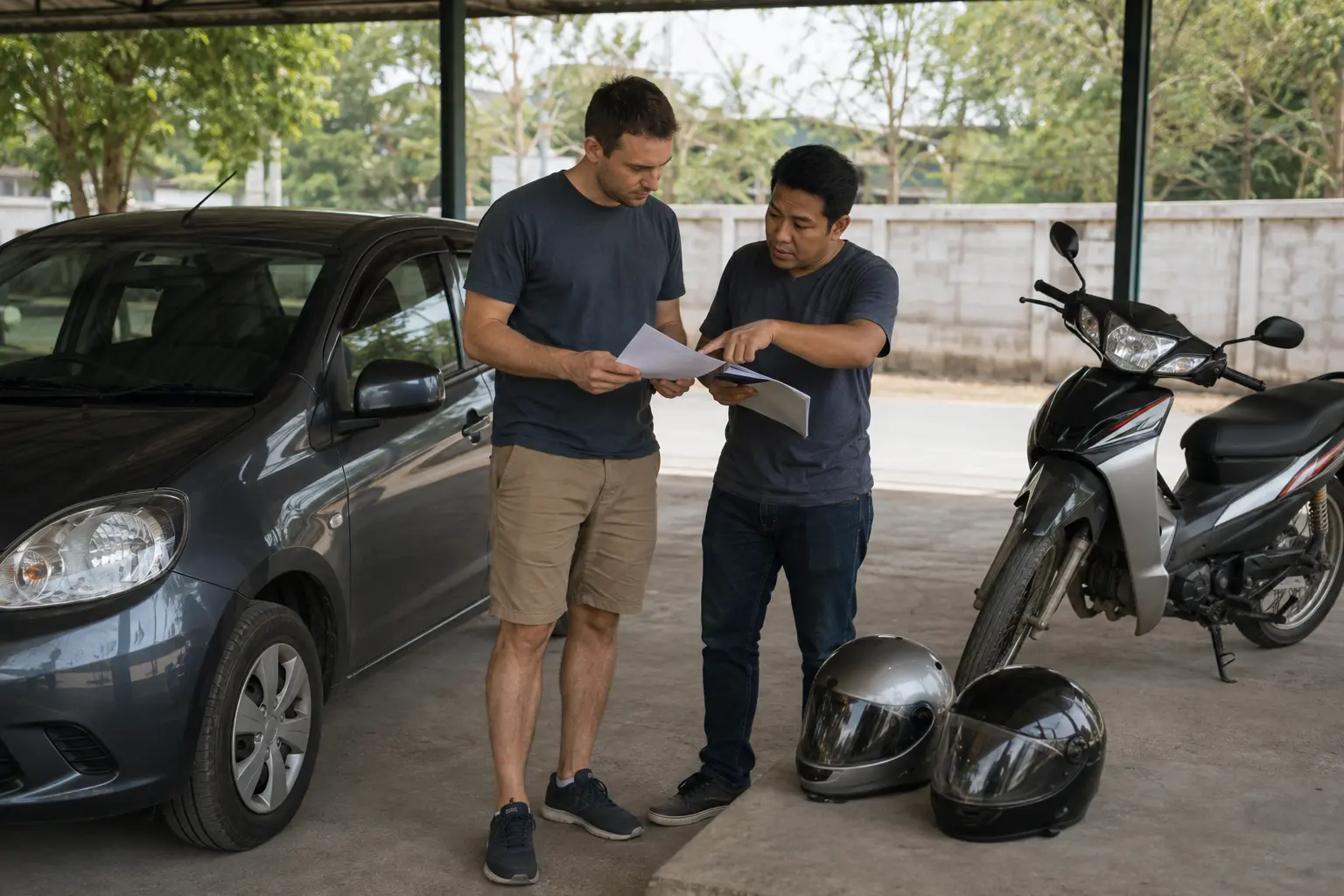
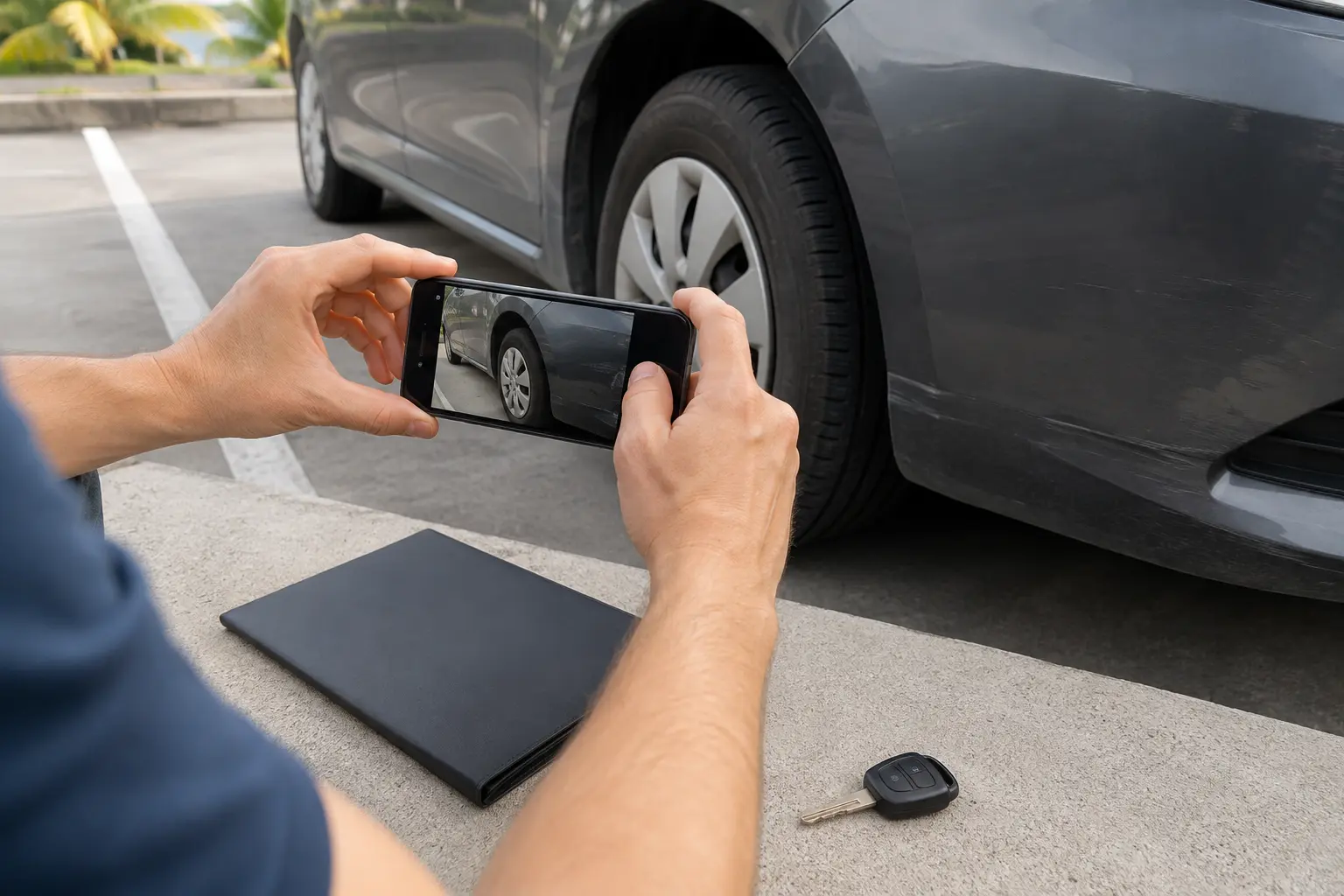
For a purchase, verify registration, chassis details, finance, tax, compulsory cover and transfer requirements. For a rental, photograph existing damage, tyre condition and fuel level and read the collision-damage excess and prohibited-use clauses.
Compare voluntary insurance limits for third-party property, bodily injury, own damage, theft, flood, medical costs, roadside support and authorised drivers. Verify the insurer with the Office of Insurance Commission.
04
Prepare for an accident before one happens
Keep the insurer hotline and policy reference in the vehicle. Photograph the scene only when safe, avoid admitting a legal conclusion you do not understand and seek medical care for injuries. For serious incidents, contact police, the insurer and an independent interpreter or lawyer as needed.
Common failure points
What to watch for
Rental approval as licence advice
The rental company's willingness to hire is not an official decision on legal entitlement.
Motorcycle gap
Incorrect vehicle class, helmet breaches or excluded use may create both safety and claim problems.
Minimum cover assumption
Compulsory cover can leave substantial vehicle, medical and liability exposure.
Evidence record
Official sources checked
These primary sources were checked on 21 August 2026. They support the regulatory or procedural statements in this guide. The issuing authority's current page, notice or policy wording takes precedence if it changes later.
01
Department of Land Transport: international driving licence
↗02Official information on international driving permits.
DLT foreign applicant appointment service
↗03Official registration route for foreign applicants.
DLT foreign licence and IDP guidance
↗04Published recognition guidance in the stated DLT process.
Office of Insurance Commission
↗Motor-insurer regulation and complaint routes.
Found a changed rule or broken source? Send the page address and replacement official source to hello@emigrated.org.
General information, not individual advice. Immigration, tax, legal, medical and insurance outcomes depend on your facts. Confirm the current official rule and use a properly qualified adviser where the consequences matter.